Top Features to Look for in Industrial Piano Hinges
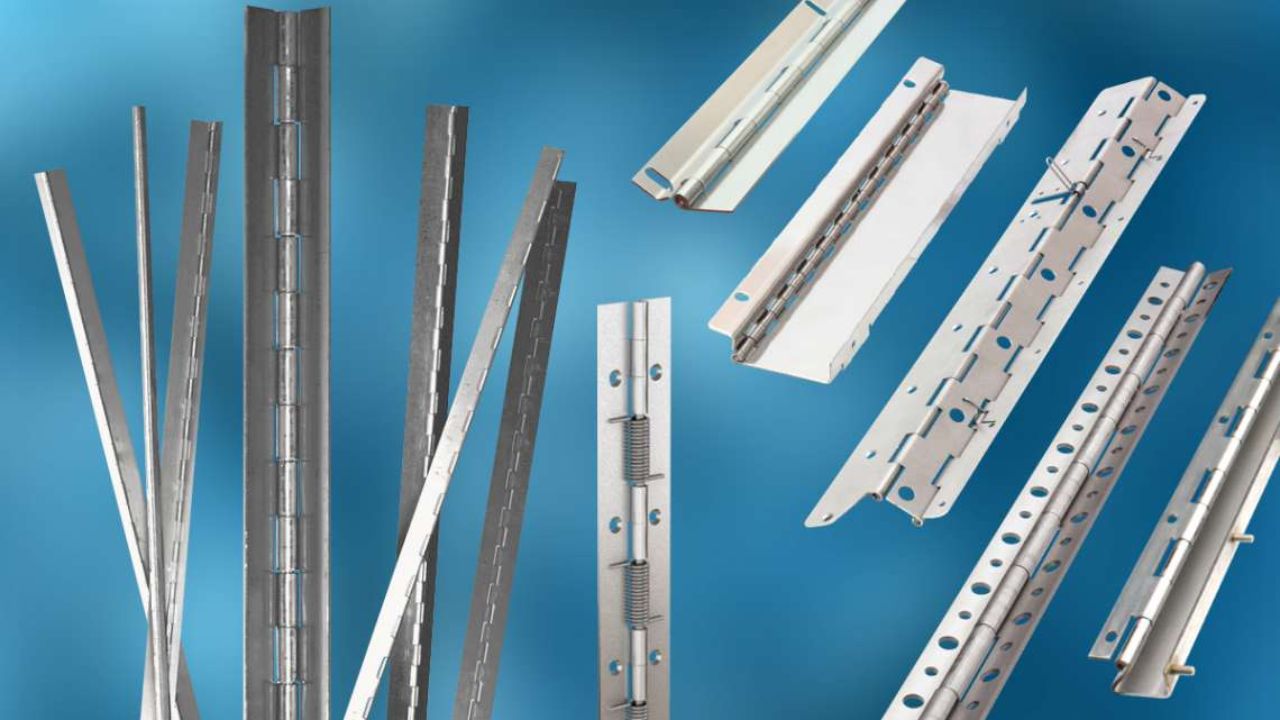
Industrial piano hinges are common to machinery covers, equipment enclosures, heavy-duty doors, and access panels due to the support they offer continuously and the reliability of performance. Piano hinges, compared to traditional hinges, load the hinge evenly on the entire edge of the door or the panel. The design enhances stability, minimizes wear, and increases long-term stability. When choosing the appropriate industrial piano hinge door, it is important to consider a variety of features.
Load Capacity and Structural Strength
Industrial piano hinges should be able to withstand heavy loads without bending, warping or losing their alignment with time. The thickness of the hinge, hinge width, and pin diameter are some of the factors determining the load capacity of a hinge. The thicker hinges are supposed to be used in high-stress applications where the doors or panels move a lot and are used frequently. A well-chosen hinge is effective in distributing weight and remains smooth even during continuous use. Most industrial experts suggest that hinges be chosen with a load value exceeding the actual operating weight to help guarantee quality, long-life operation, and minimize the possibility of an early failure.
Continuous Design for Even Load Distribution
A continuous design is one of the most useful attributes of a piano hinge. It enables the hinge to run the entire length of a panel or door. This arrangement spreads the load evenly over the whole mounting surface rather than concentrating the load on a few positions. Even weight distribution eliminates sagging in the door. It also minimizes stress on the screws, enhancing the stability of alignment as time goes by. Continuous hinges are also used in industrial environments where heavy or large panels are often opened and closed, and in which they offer an easy operation with more structural support than traditional hinge systems.
Pin Design and Hinge Flexibility
The hinge pin contributes significantly to the performance and reliability of industrial piano hinges. Applications may be fixed pins to be as secure and stable as possible, or a removable pin may be preferred to quickly disassemble the application and service the equipment, or to access the equipment. Hinge pins are made out of high-quality materials to withstand wear, bending, and friction when used repeatedly. Well-engineered pin systems enhance consistency in movement and limit the chances of binding or undue motion. The choice of pin design will enable the hinge to work effectively and address the unique project operational needs.
Installation Compatibility and Precision
To maximize the performance of industrial piano hinges, they should be installed properly. Quality hinges are produced with uniform spacing of holes and with accurate dimensions to make it easy to install them and enhance the accuracy of alignment. Hinge fitting properly along the entire door perimeter assists in keeping the operation smooth and minimizing stress due to improper fitting. In industrial use, all screw holes are usually utilized to provide maximum weight distribution and stability. Precision manufacturing also reduces the errors during the installation and contributes to the reliability of the functioning of the hinge under severe conditions of use.
Durability and Cycle Performance
The industrial piano hinges are widely used in settings where doors and panels are opened and closed thousands of times during their service. Due to this, durability and cycle performance are highly significant attributes to consider. Numerous heavy-duty hinges are tested by cycling to ensure that they can be used repeatedly without much wear or mechanical breakdown. High-cycle hinges are built to stay in line, minimize friction and provide consistent movement during long-duration operations. A hinge that is chosen to be used in a challenging industrial application will assist in minimizing the maintenance expenses and downtimes and enhance the level of operational reliability.
Surface Finish and Environmental Protection
The finish of the surface of an industrial piano is a hinge in both appearance and protection in the long term. Special protective finishes can be applied to enhance resistance to corrosion, scratches, and environmental damage. Durable finish in severe industrial environments offers extra protection against moisture, chemicals and abrasion. However, a good finish might greatly improve the life span of the hinge and overall performance. The correct finish can make the hinge durable and operational even in adverse conditions of operation.
Conclusion
Industrial piano hinges are vital attachments used in designs that require durability, stability and strength. High load capacity, continuous design, durable pin systems, ability to withstand corrosion, and precise compatibility with installation are all features that help to increase the performance and life of hinges. These considerations can help contractors, manufacturers and purchasers of projects to pick industrial piano hinges that give easy operation, structural support, and reliable durability even in the harshest conditions.